
This platform is designed to provide brief, periodic news from the legal world that will hopefully be relevant to your work or personal life.
In this new-year edition: a few property-related issues affecting owners, renters, and neighbors. Heads up! These developing issues in Florida law might affect you, and they might surprise you, too.
1. Property owners beware: if you allow a known, dangerous condition to flourish on your property, you could be liable for incidents resulting even on other properties.
2. Property owners (with outstanding mortgages) beware: lender-placed property insurance might not help you in the event of property damage.
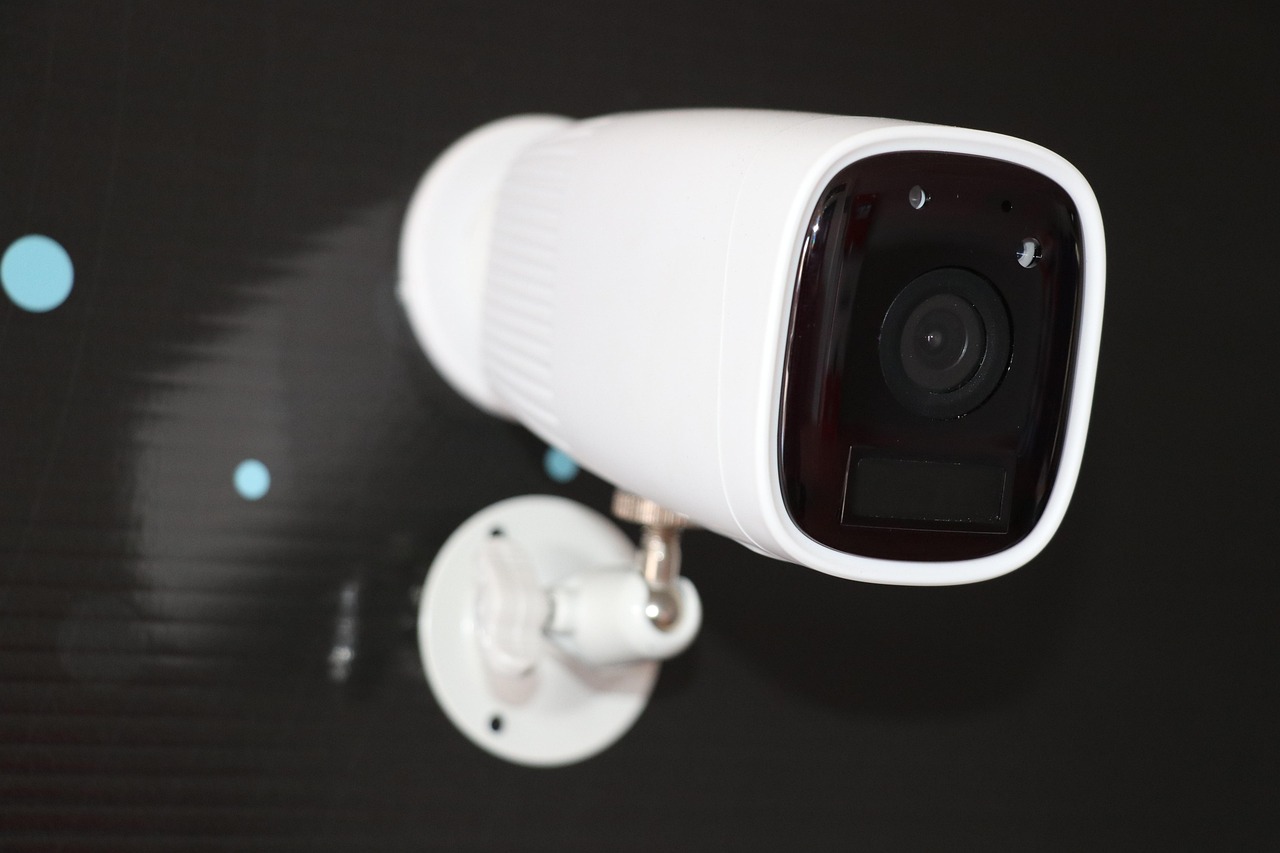
3. Property owners, renters, and neighbors beware: the use of security cameras that peer onto your neighbors’ property could land you in court.
1. Dangerous Conditions
In December 2025, Florida’s Second District Court of Appeal issued an opinion and a kind of wake-up call in the case of Bartley Investments, LTD. v. Menendez, 50 Fla. L. Weekly D2676a (Fla. 2d DCA 2025). The defendant was a family-owned business that invests in real estate, and it owned (and rented to tenants) a bunch of units in a residential townhome community. One of those units had become a known “drug hole” – a place marked by drug dealing and related fighting, theft, etc. The plaintiff owned and occupied a townhome in the same community, although on a different block and some distance from the drug hole. One day a man who frequented the drug hole visited there and got into a fight with people living there, and after leaving there he went to the plaintiff’s property (seemingly randomly – they were not acquaintances), broke into the plaintiff’s fenced yard, and violently attacked and injured the plaintiff.
When the plaintiff sued, the defendant argued, among other things, it couldn’t be held liable for the plaintiff’s injuries because it had no control over the attacker (who was not the defendant’s tenant and did not live on the defendant’s property) and because it had no control over the property where the attack occurred (which belonged to the plaintiff and was not even particularly close to the drug-hole property owned by the defendant).
But the court said those things did not matter. Instead, what mattered was that the defendant “had control over who resided in the Bartley townhome [drug hole] and thus had the ability to correct the known dangerous condition but failed to do so.” The court affirmed the defendant’s liability and a large award of damages to the plaintiff because the defendant “allowed a known dangerous condition to exist (that is, drug use and drug deals), had the means to correct it, and yet failed to do so.”
This may be an extreme example – something that seems unlikely to happen where you own property – but it should serve as a wake-up call to owners who do not occupy their property: if you allow a known, dangerous condition to flourish, you could be liable for incidents resulting not just on your property but even on other properties.
2. Lender-Placed (a.k.a. Force-Placed) Property Insurance
Another 2025 opinion that might come as a surprise to some was issued by Florida’s Third District Court of Appeal in Ahmed v. Hamilton Insurance DAC, 409 So.3d 704 (Fla. 3d DCA 2025), dealing with “lender-placed” or “force-placed” insurance. Residential mortgages commonly require the borrower to maintain property insurance and commonly provide that if the borrower fails to do so, the lender may step in and (1) obtain its own insurance covering the lender, not the borrower, and (2) charge the cost of that insurance to the borrower. So, the borrower is then paying for the lender’s coverage. This is known as lender-placed or force-placed insurance. The borrower who is charged for lender-placed insurance might assume he or she will benefit from it in the event of storm damage or some other loss. But the borrower might be wrong.
In the Ahmed case, the borrower failed to maintain the required insurance coverage and so the lender obtained a lender-placed policy. The property was then damaged by Hurricane Irma in September 2017. The insurance company determined the claim was covered, estimated the loss to be a little over $80,000, and paid that amount to the lender under the lender-placed policy. The borrower believed that amount was too low, believed he was entitled to benefit from the lender-placed policy, and sued the insurance company. He was unsuccessful. The court rejected the borrower’s claims because it found the borrower had no rights to sue or otherwise enforce a policy that was between the insurer and the lender, not him.
The warning of the Ahmed case: if you’re unable to maintain insurance on your property and your lender force-places its own insurance and charges you for it, do not assume you will benefit from that coverage in the event of a loss.
3. Security Cameras and Privacy Battles
The use of security cameras has become increasingly popular. Many people have installed cameras at or near the entrances to their homes in an effort to deter porch pirates and other criminals. At the same time, many people have installed cameras aimed not at their own properties, but aimed at least partly onto neighboring properties, and this is leading to privacy battles in Florida’s courts. If a camera is located on your own property but aimed away from your property so that captures activity on a neighbor’s property, are you within your rights, or are you invading your neighbor’s privacy? As is often the case, the legal answer is: it depends.
* Note that concerns over security cameras come up in a variety of legal contexts – for examples, one neighbor suing another for an injunction against stalking, or one neighbor suing another for invasion of privacy, or an employee or patron of a business suing the business for invasion of privacy – and each context comes with its own set of legal issues and its own legal framework. As always, this short article is to provide information in summary fashion, not legal advice for your unique situation.
In the common context of security cameras on residential property and neighbors’ concerns for privacy, a helpful guide was provided by Florida’s Second District Court of Appeal several years ago in the case of Jackman v. Cebrink-Swartz, 334 So.3d 653 (Fla. 2d DCA 2021). In that case, a couple installed on their home a 25-foot-high rooftop camera that had night-vision capabilities and recorded 24 hours a day, seven days a week. The camera was positioned to see over their neighbors’ privacy fence, into a portion of their neighbors’ back yard and the edge of their neighbors’ lanai. (These specific factual details matter.) The neighbors sued, claiming (among other things) the camera was invading their privacy.
Florida’s courts have recognized “invasion of privacy” as a claim that comes in several flavors, one of which is known as “intrusion upon seclusion.” As the Jackman court explained: “[i]ntrusion upon seclusion is defined as where a person intentionally intrudes, physically or otherwise, upon the solitude or seclusion of another or his private affairs or concerns… if the intrusion would be highly offensive to a reasonable person.”
Discussing the issues relevant to an intrusion-into-seclusion claim, the Jackman court stated: “there is a reasonable expectation of privacy within the curtilage of a residence, and we conclude that there is a material difference between occasionally viewing the activities within a neighbor’s backyard that are observable without peering over a privacy fence [apparently that would be okay] and erecting a camera to see over a privacy fence to thereafter surveil and record those activities on a consistent basis [not okay].” In other words, the latter was a problem in the court’s view, and the Jackmans’ neighbors had gone too far. The court concluded that “the position of the camera in this case – peering over a privacy fence into the curtilage of a neighbor’s backyard – was dispositive [the factor that tilted the scales].”
The Jackman opinion was a good illustration of the issues because the plaintiffs, too, had installed their own security camera that was aimed back at the Jackmans’ property. But – and this was the key – theirs was positioned differently. This excerpt from the Jackman court’s discussion is enlightening as to how Florida’s courts are likely to weigh neighbors’ competing interests: “We do not overlook the Swartzes’ argument that the Jackmans had their own camera installed on their home and that it surveilled a portion of the Swartzes’ home. However, the Swartzes have acknowledged that the Jackmans’ camera is aimed primarily at the border area between the homes – rather than into the Swartzes’ backyard. Further it is undisputed that the door of the Swartzes’ home that is visible to the Jackmans’ camera is a side door to the house which is visible from the street. Thus the Swartzes do not have the same subjective expectation of privacy related to that area of their home as they would if it was enclosed by a privacy fence adorned with ‘no trespassing’ signs.”
It’s hard, if not impossible, to draw clear, one-size-fits-all guidelines from the Jackman opinion and the other, more recent opinions on the topic. But there are clearly some important take-aways to consider about the placement and positioning of a security camera. Even if it’s located on your property, is it capturing activity on your neighbor’s property? If so, how much and which area(s) of your neighbor’s property, and what kind of activity is being captured there? In addition to evaluating those factors, I suggest there’s a simple warning here: consider your neighbors’ interests, not just your own, and when in doubt, it’s wise to seek legal advice sooner rather than later.